Coffee Beans as Fertilizer
 PropertyAccess Team
Recently I got a handout from Starbucks that advertised Starbucks coffee grounds as fertilizer for your garden-just ask the barista!
Now, I’m not a geologist or a botanist, and the most I know about using coffee grounds is that it applying it can make your milflores flowers produce more vibrant blossoms. Other than that, I had nothing, so I took a brochure and checked it out.
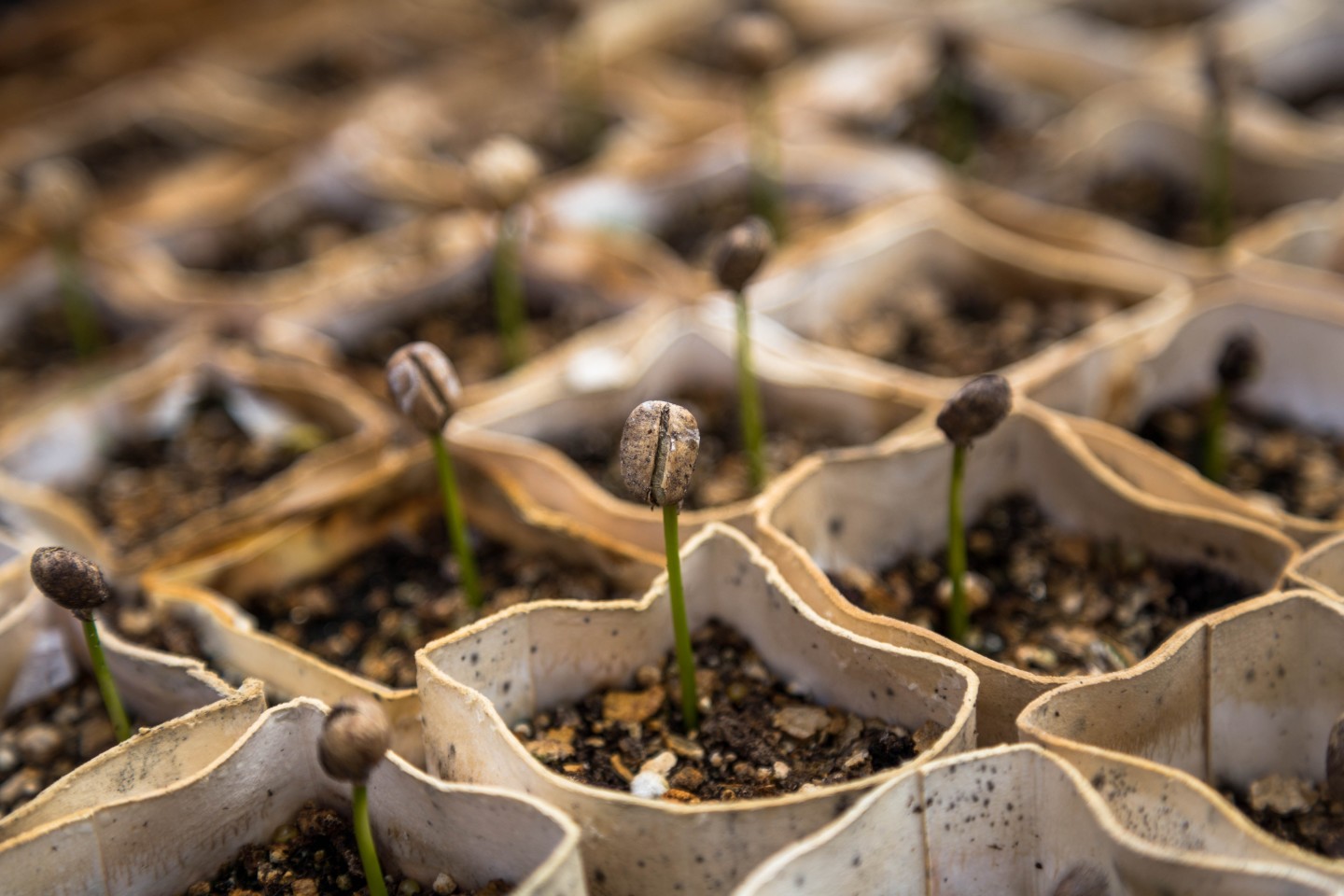
What do we need to know about coffee grounds? Used coffee grounds are high in nitrogen and are also primarily composed of phosphorus and potassium. Coffee grounds are also made up of a lot of useful minerals. In layman’s terms, used coffee grounds are generally acidic, and if you already have an acidic soil in your garden, it’s probably better not to apply the grounds. However, if you’re into composting, adding coffee grounds in the mix can be fantastic because they really help in breaking down the compost into usable fertilizer sooner.
Used coffee grounds are also said to be good for plants who have a more “acidic” taste such as aforementioned milflores. Other plants include roses, azaleas, avocados and lemon trees (I would imagine similar trees like suha and kafir limes would also benefit from coffee grounds).
If your soil is too rocky or is composed mainly of clay, you can employ vermiposting, which is basically composting with the help of earthworms. You can slowly help improve your soil by mixing in the compost and the earthworms. Where do the coffee grounds come in? Well, it must be the caffeine in them, but adding the coffee grounds in the earthworms’ diet must really help motivate them breaking down your soil much more easily! Funnily enough, coffee also functions as a repellant for vermin. Rubbing coffee grounds around an area can actually prevent ants from going to that area, so I won’t be surprised if coffee grounds have the same effect for other types of insects.
So now we know all these useful facts, how do we get started? Well, first we have to know how much do we need to use. Starbucks warns against using coffee grounds as more than 25% in your compost pile. Too much acidity can make your plants “burn” and suffer, and certainly nobody wants that. If you’re a bit worried about the acidic content of the coffee grounds in your compost, Starbucks advises that you add a bit of lime—a teaspoon of lime or wood ash to be exact—for every five pounds of coffee grounds that you use. No lime or wood ash at hand? Don’t worry—egg shells are a great source of lime and in fact, they’re usually used in combination with coffee grounds.

Should coffee grounds be applied in soil wet or dry? There are different opinions about this, but I think it would be better if you lightly bake or sun your coffee grounds first. I’ve learned by experience that coffee grounds can get REALLY moldy, so that’s one step to prevent that from happening. Apply only a thin layer of coffee grounds for easy absorption (if they’re not already mixed with compost) and a thick layer will, again, just encourage molds to grow on them. I am not sure how long it takes for the soil to completely absorb the coffee grounds, but I suggest that you wait until the coffee grounds have integrated themselves fully into the soil (read: you can’t tell the soil from the coffee grounds anymore).
I’ve been reading about this coffee grounds initiative from Starbucks before, and what seemed like a gimmick before is now a very good idea for us to put those coffee grounds they churn out daily to good use. Hey, and it can’t hurt that your garden is now a little more sosyal—powered and enriched by Starbucks, no less!


